
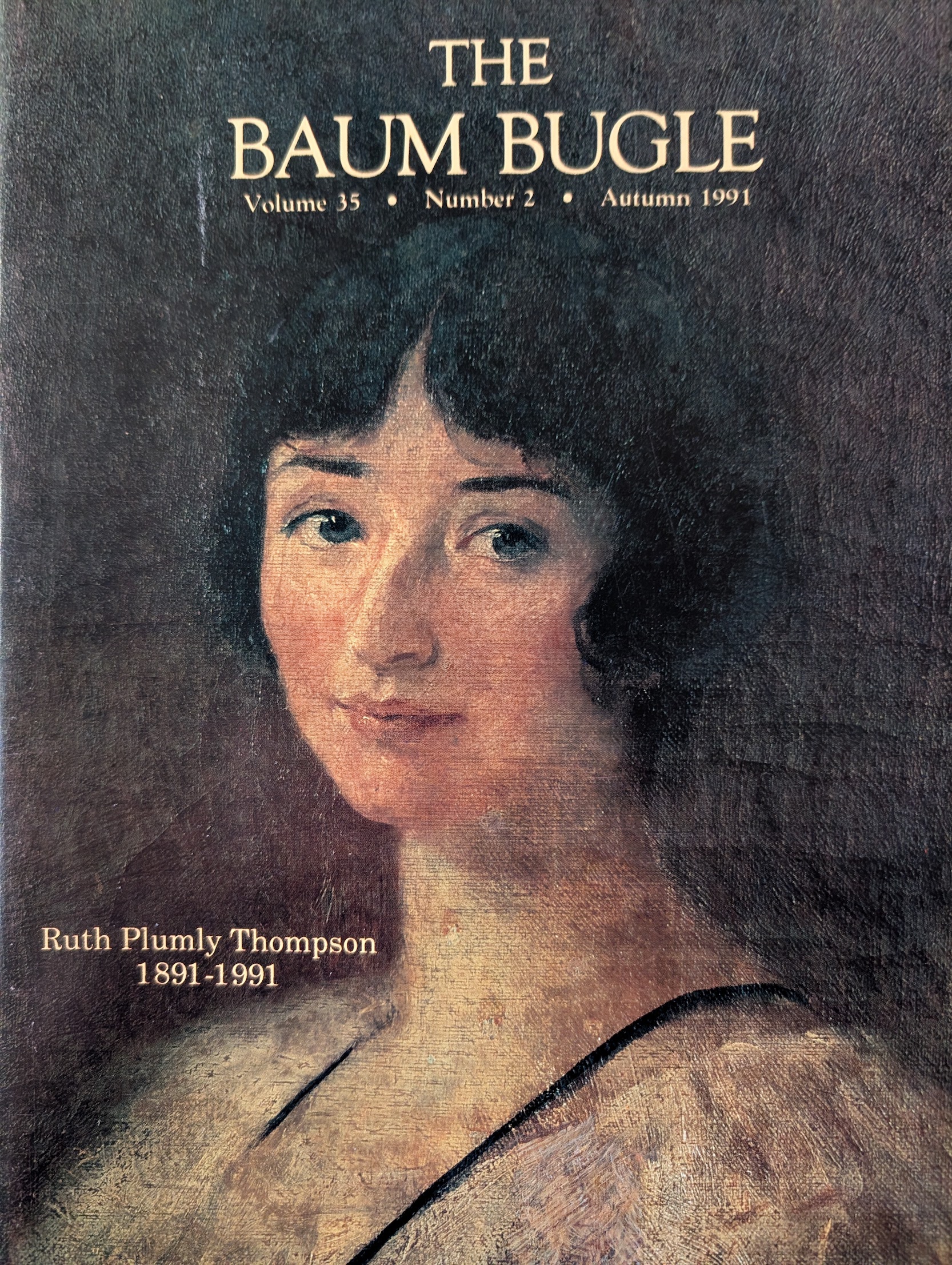
The Royal Successor: Ruth Plumly Thompson
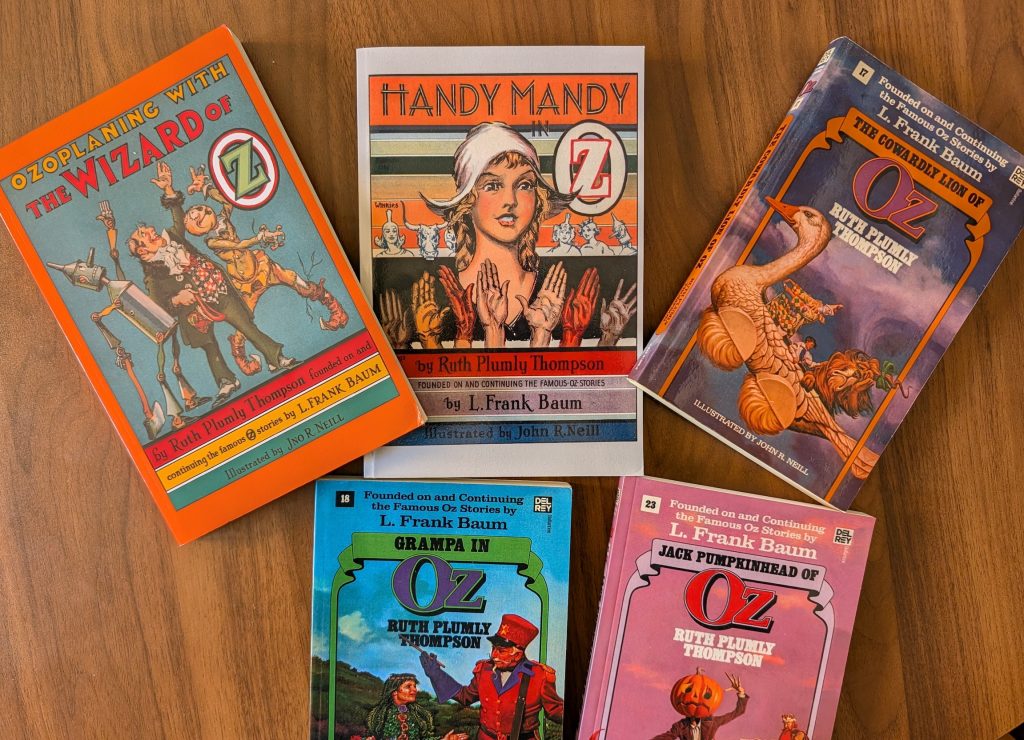
While I will always think foremost of L. Frank Baum and the famous 14 Oz novels, it is remiss to forget that after Baum’s passing, Ruth Plumly Thompson took up the pen. She went on to write a whopping 21 books that contribute to the “Famous Forty” canon. Between 1921 and 1939, she wrote one Oz book every year for the publisher Reilly & Lee, beginning with The Royal Book of Oz and concluding with Ozoplaning with the Wizard of Oz.
Having been an avid Oz fan for life, I decided to undertake the challenge of reading Ruth’s work and diving into her little-known life. Whilst so much is documented about L. Frank Baum’s life there was little information on Ruth and it required a bit more digging to get a sense of her character and connection to Oz. I’m excited to share these fascinating finds here and to discuss them on Down the Yellow Brick Pod!
I want to extend a massive thank you to Bill Beem, Membership Coordinator at The International Wizard of Oz Club, who sent me several copies of the Baum Bugle. These archives allowed me to dive deep into Ruth as both a person and a writer. Thank you also to the Oz community for continuing to support one another and keeping this history alive.
Ruth’s Early Life and Path to Writing
Ruth Plumly Thompson was born in 1891 – making her a fellow “’91 girly” (though I’ve got her by exactly a century). Interestingly, Ruth was known to lie about her age, later claiming she was born in 1890. Her reasoning? “People did not like to buy from older authors.” Iconic behavior, honestly.
Her early life was marked by resilience. Her father passed away at just 32, and died beleving he had provided well for his family. Unfortunately, his wife had not had to heart to tell him they had been left with only $100 after a market crash. As a result Ruth’s mother went into hotel management to keep them afloat, a job Ruth and her siblings actually enjoyed because they got to eat “leftovers from convention dinners.” However, Ruth’s mother began to over extend herself by taking on additional work helping patients with nervous dispositions. Leading to a decline in her health.
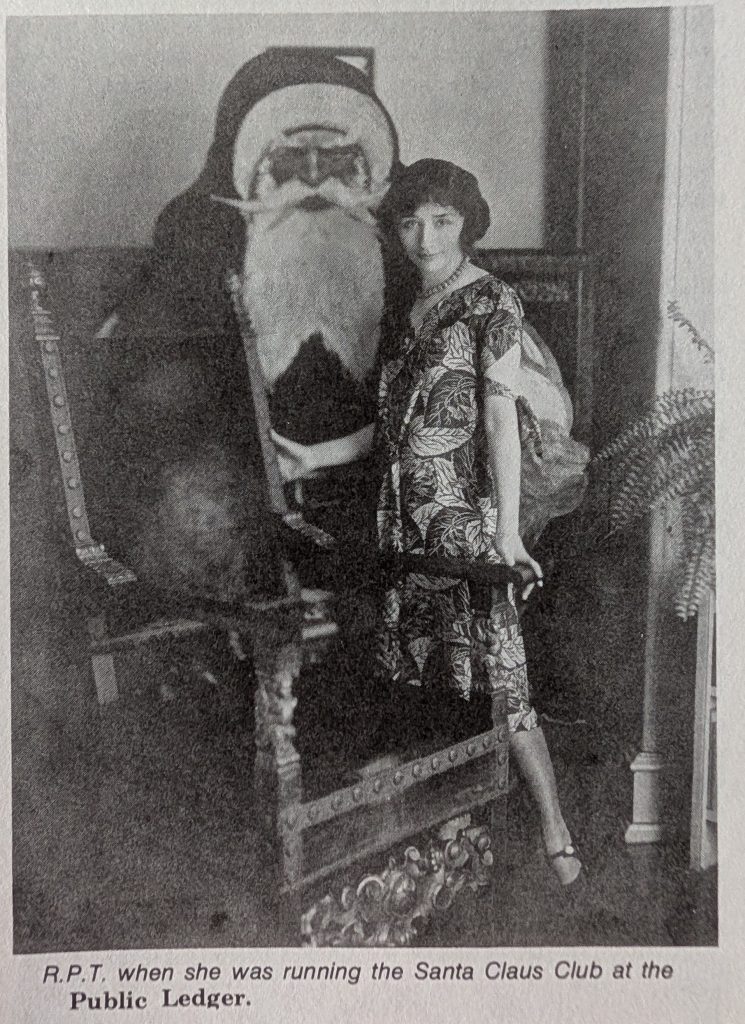
Throughout her childhood Ruth had been a storyteller and would write for hours according to her family members. While Ruth earned a scholarship to Swarthmore College family obligations came first. With an overworked mother, the two eldest sisters stepped up: Dorothy became a secretary, and Ruth became a freelance writer. She secured her first job writing the children’s page for the Public Ledger based on pure talent, where she was famously (and backhandedly) praised for having “the brain of a man.”
A Lover of Words and Life: About her personality
Ruth wasn’t just a writer; she was a stylist. Her prose was packed with puns, slang, and clever turns of phrase. She even invented her own vocabulary, like “Geoziphy.”
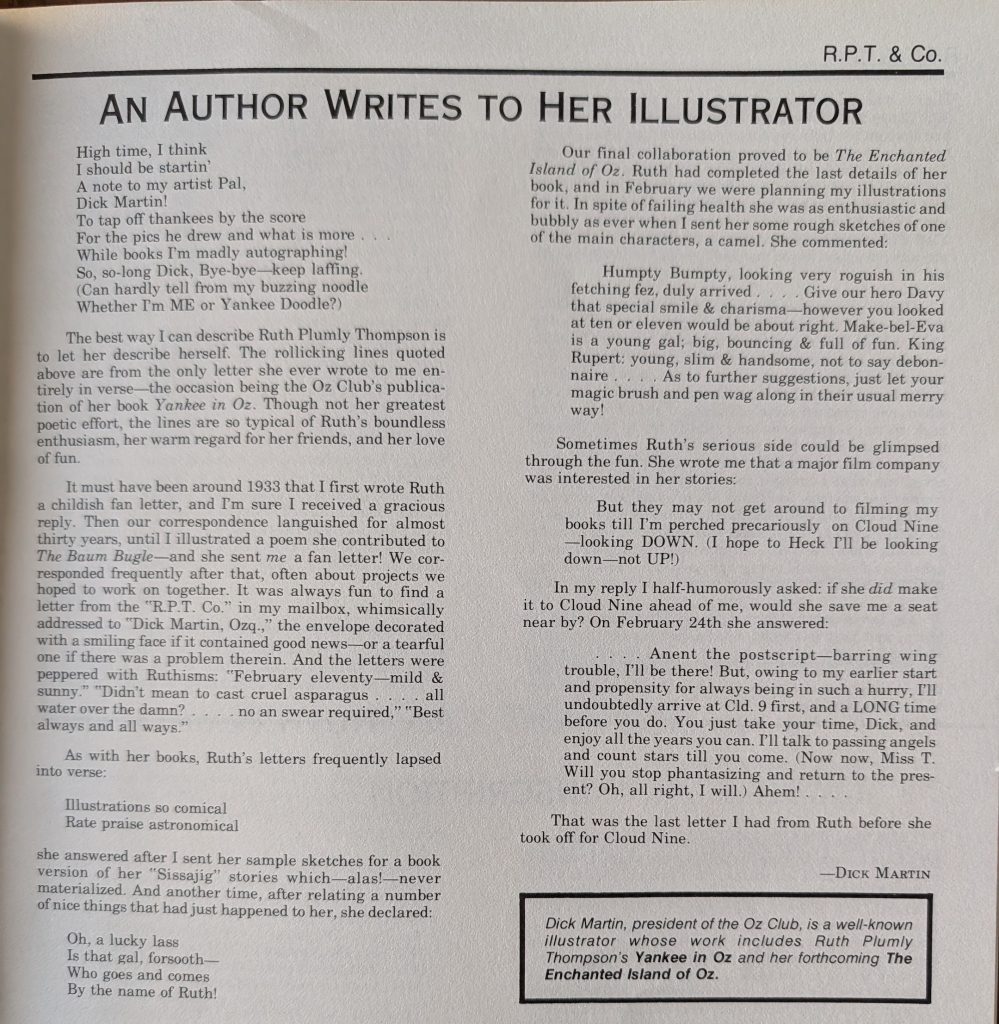
Her love for verse was woven into her DNA. Her first writing ventures were poetry, and her Oz books are littered with random rhymes and songs. This wasn’t just within published work she corresponded with her illustrator for Yankee in Oz, Dick Martin, almost entirely in verse. Even her book inscriptions were usually rhyming couplets. Some of which can be seen in Baum Bugle issues.
Beyond the page, Ruth was a woman of deep compassion: and a bit of a temper.
- Loved Animals: She frequently carried apples and bread for carriage horses. She would often favor animals to humans and took great deal to help animals mistreat. Her neighbor’s dog, Yankee, was such a favorite of hers that the name eventually became a character in her books.
- Christmas: Her favorite day of the year was Christmas. Same here Ruth!
- Was a Philanthropist: She founded the “Santa Claus Club” to organize food and gift drives for children in need and who had nothing at Christmas.
- Was Decidedly Opinionated: According to her nieces, she would decide if she liked or disliked someone the moment she met them. She had zero patience for “pompous or absolute boors.”
Continuing the Oz Legacy
L. Frank Baum passed away in 1919, and though Ruth never met him, she became the guardian of his legacy. In 1920, William F. Lee (VP of Reilly & Lee) invited her to continue the series. Her first novel, The Royal Book of Oz, debuted in 1921.
Ruth was a savvy businesswoman. She fought for a fair contract, refusing a flat $500 fee until the publishers agreed to split the 10% royalties between her and the Baum estate. Her talent won over the skeptics, including the legendary Oz illustrator John R. Neill, who wrote to her:
“After illustrating about 17 Oz Books, I think it worthwhile to let you know… my congratulations on having secured an author of such superior qualifications.”
The Friction: “I Just Have Fun With It”
Not everything was “Yellow Brick Road” ease. Ruth’s philosophy often clashed with the “Oz purists.” She wrote “off the top of her head,” rarely knowing where a plot was going, and she grew impatient with readers who looked for deep “basic motivations” in her characters.
She grew impatient with fans who took the lore too seriously, saying:
“I am continually getting grave letters from people wanting to know ‘what do you consider the basic motivation for such-and-such character?’ I never worried about motivation. Most of the time I can’t remember in what book the character appeared.”
This came to a head in the 1960s during the “Geography Debate.” Ruth had a habit of flipping the map and placing Munchkinland in the West and Winkie Land in the East. When the Oz Club insisted she fix this so it matched Baum’s original books, she was indignant: “Who cares where the places are? In all the thousands of letters I received from children, none of them cared.” She finally yielded, but with very “bad grace.”
The “Live” Oz Experience: From Baum to Ruth
Baum’s Multimedia Extravaganzas
L. Frank Baum was a showman first and a writer second. He had a background in theater and window dressing, so he didn’t just want to sell a book; he wanted to sell an illusion.
- The “Fairylogue” (1908): Baum toured with a massive multimedia show called The Fairylogue and Radio-Plays. He appeared on stage in a white suit, acting as a “lecturer” who had traveled to Oz. He used hand-tinted film and slides to show the audience what he’d “seen.”+2
- Why the “Radio” name? He called them “Radio-Plays” over a decade before home radios existed, simply because the word sounded futuristic and magical. This was Baum’s specialty—using technology to create wonder.
Ruth’s Puppet Orchestras & Playlets
When Ruth took over in 1921, she kept this theatrical spirit alive, but she made it more intimate and interactive for the kids.
- A Day in Oz: Ruth wrote a “musical playlet” specifically for department stores and bookshops. Instead of a massive film crew, she had local children perform in the stores. This turned every book launch into a community event.
- The 14-Piece Puppet Orchestra: In 1928, Ruth collaborated with marionette artist Jean Gros to create a puppet version of The Magical Land of Oz. This toured the country and even appeared at the Chicago World’s Fair! These weren’t just simple puppets—they had a full “orchestra” of puppets that performed, creating a professional spectacle right in the middle of a department store.+1
- The “Radio” Connection: Like Baum, Ruth used the allure of new tech. In 1924, she created a leaflet called “The Scarecrow of Oz Answers Questions by Radio.” Kids would write questions to the Scarecrow, and they would “receive” answers through this marketing gimmick
This shows that Ruth wasn’t just a writer; she was a one-woman marketing machine. In the 1920s, she was staging puppet shows in department stores with full puppet orchestras to get kids excited about Oz. Decades later, she was still at it, creating the beloved ‘Perky Puppet’ for Jack and Jill magazine. Even when she was unfairly replaced in her late 70s, she didn’t stop, she just channeled that energy back into the Land of Oz.”
The Disney Years and Family Feuds
By 1939, Ruth was weary. It wasn’t just the writing; it was the politics. She faced constant pushback from the Baum estate, specifically from Frank J. Baum, who felt he should have been his father’s successor. (Fun fact: Frank J. actually wrote his own Oz book, The Laughing Dragon of Oz, and was promptly sued by the publishers!)
Ruth eventually moved on to ghostwrite many Walt Disney books. She even negotiated with Roy Disney about animating the Oz books, but the deal fell through when the Baum estate sold the rights elsewhere.
A Writer Until the End
The later years were tough. Ruth was saddened when her books went out of print, and in 1969, she was heartbroken after being replaced at her job writing for Perky Puppet.
However, her spirit never broke. Even after a collapse that led to a long hospital stay, she committed herself to changing her manuscript The Enchanted Island into an Oz book. At the very end, she was still a professional, proudly announcing that she could “still meet a deadline.”
As for the 1939 MGM movie? It was a sore spot. Her nieces recall that Ruth had a bitter relationship with the film. She wasn’t even invited to the premiere. When she finally saw it at a local theater with her nieces, she wasn’t impressed by the spectacle. She was mostly worried that the Wicked Witch would be “too scary for children.”
thanks for info.